
Aviation audit and findings management, on the same graph as safety
In 50 words
Audit management plans the audit programme, runs the fieldwork and drives every finding to a corrective action. In eAviora each finding links to the requirement it breaches and the action that fixes it, and an audit cannot close while a finding its policy names as blocking is still open.
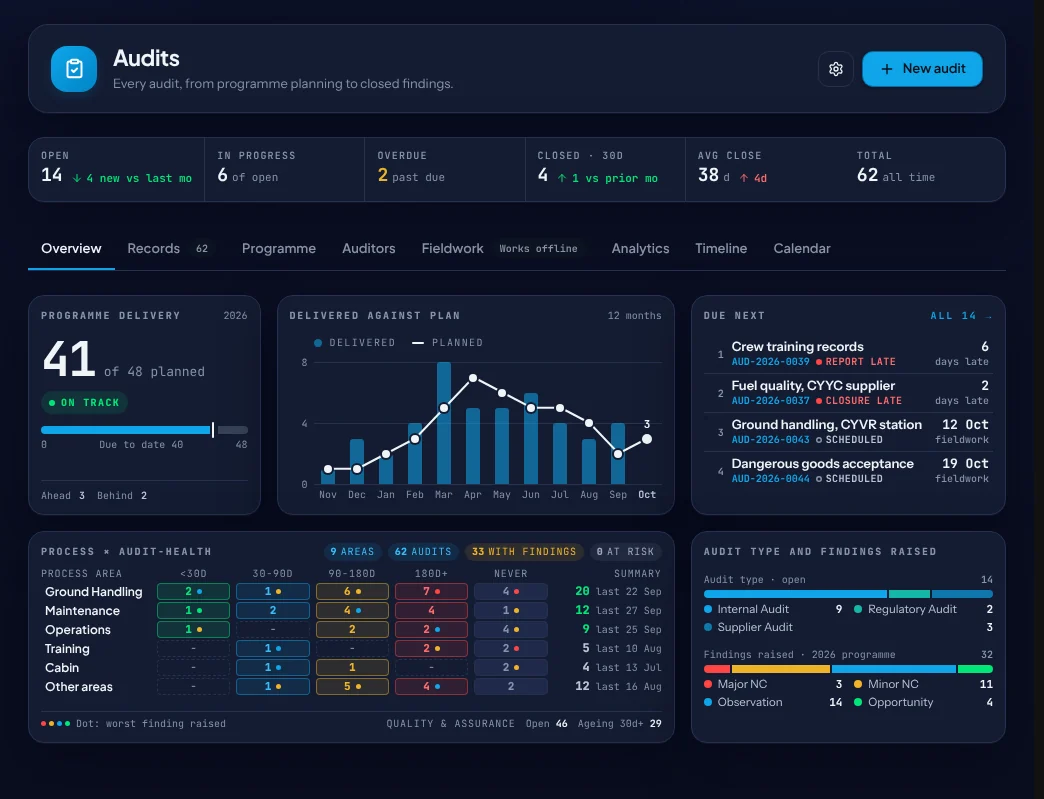
At a glance
The module, on one sheet
- Suite
- Quality & Assurance · Assurance Operations
- Audit types
- Internal, regulatory and supplier audits
- Records
- AUD audits, QMS-FND findings, QMS-NCR non-conformities, QMS-OBS observations
- Stages
- Prepare, Scope, Fieldwork, Findings recap, Assurance, Closure
- On the phone
- Fieldwork on eAviora Field, with or without signal
- Works with
- Compliance, Action Plans, Documents, Evidence Hub
What it does
Four things, done on the record
An audit programme
Planned against coverage obligations and auditor currency, with a proposed programme to review.
Fieldwork, offline
Auditors assess every scoped requirement on site, with or without signal.
Findings with their evidence
Each finding names the requirement it breaches, its level and its evidence.
Findings dealt with first
Each finding is closed, or carries a corrective action, before the report is finished.
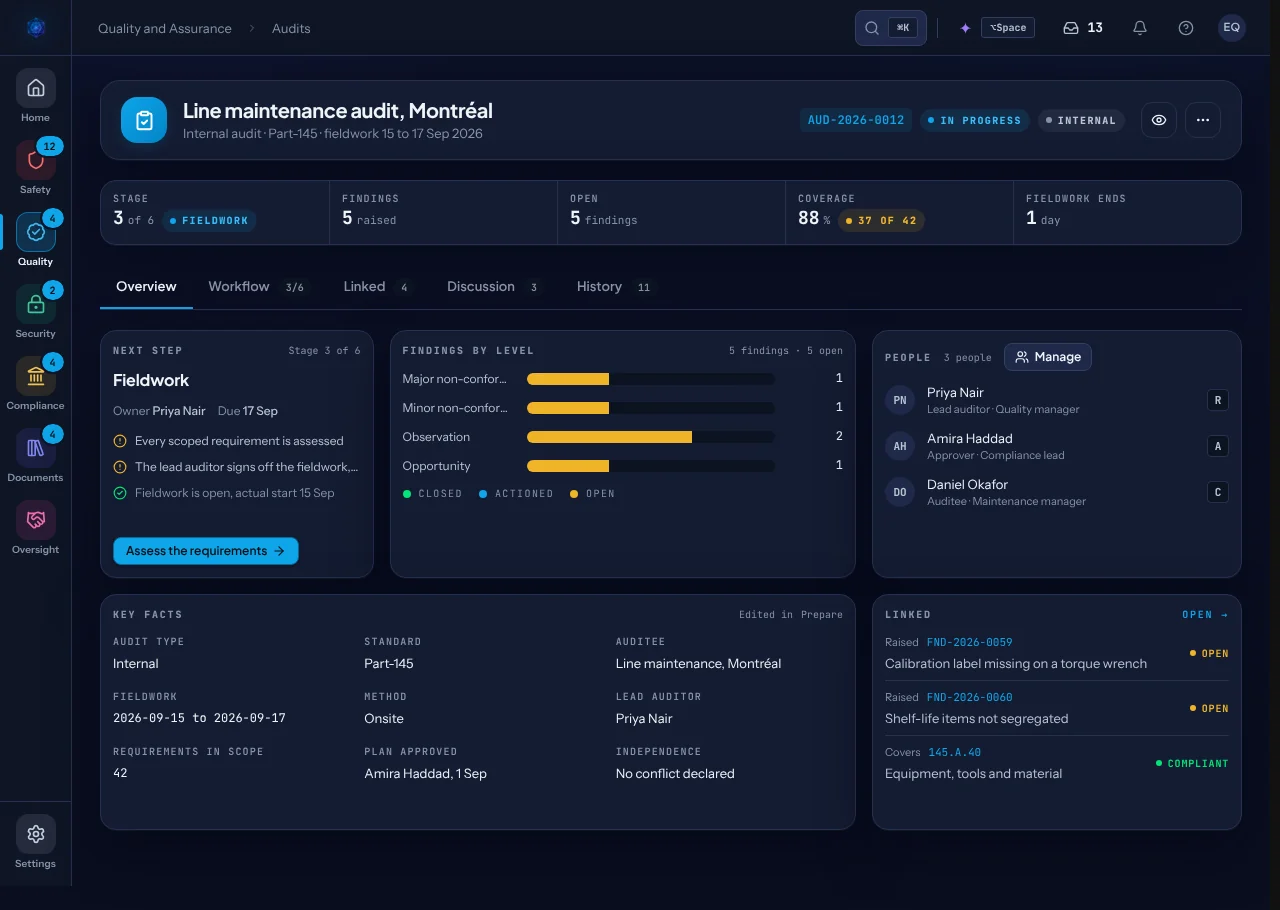
In the product
An audit, in fieldwork
- The next step and what it waits on: every scoped requirement assessed, the lead auditor’s sign-off.
- Findings by level, from major non-conformity to opportunity.
- The findings raised and the requirements covered, linked.
The rule it holds
An audit cannot close over a blocking finding.
Each finding is closed or actioned before the report, and the findings your policy names as blocking are closed before the audit closes.
On the graph
What it links to
Questions buyers ask
Short answers
Can auditors work offline?
Yes. Fieldwork runs on site with no signal, on the web or on eAviora Field, and the assessments send when the device is back online.
Which audits can we run?
Internal, regulatory and supplier audits, scoped to the standards on your compliance register.
Does every finding need a corrective action?
Before the report is finished, each finding is closed or has a corrective action linked. The audit then closes when the findings your policy names as blocking are closed.
Reading
From the insights library
See Audits and findings on your own records
A walkthrough with the people who build eAviora.